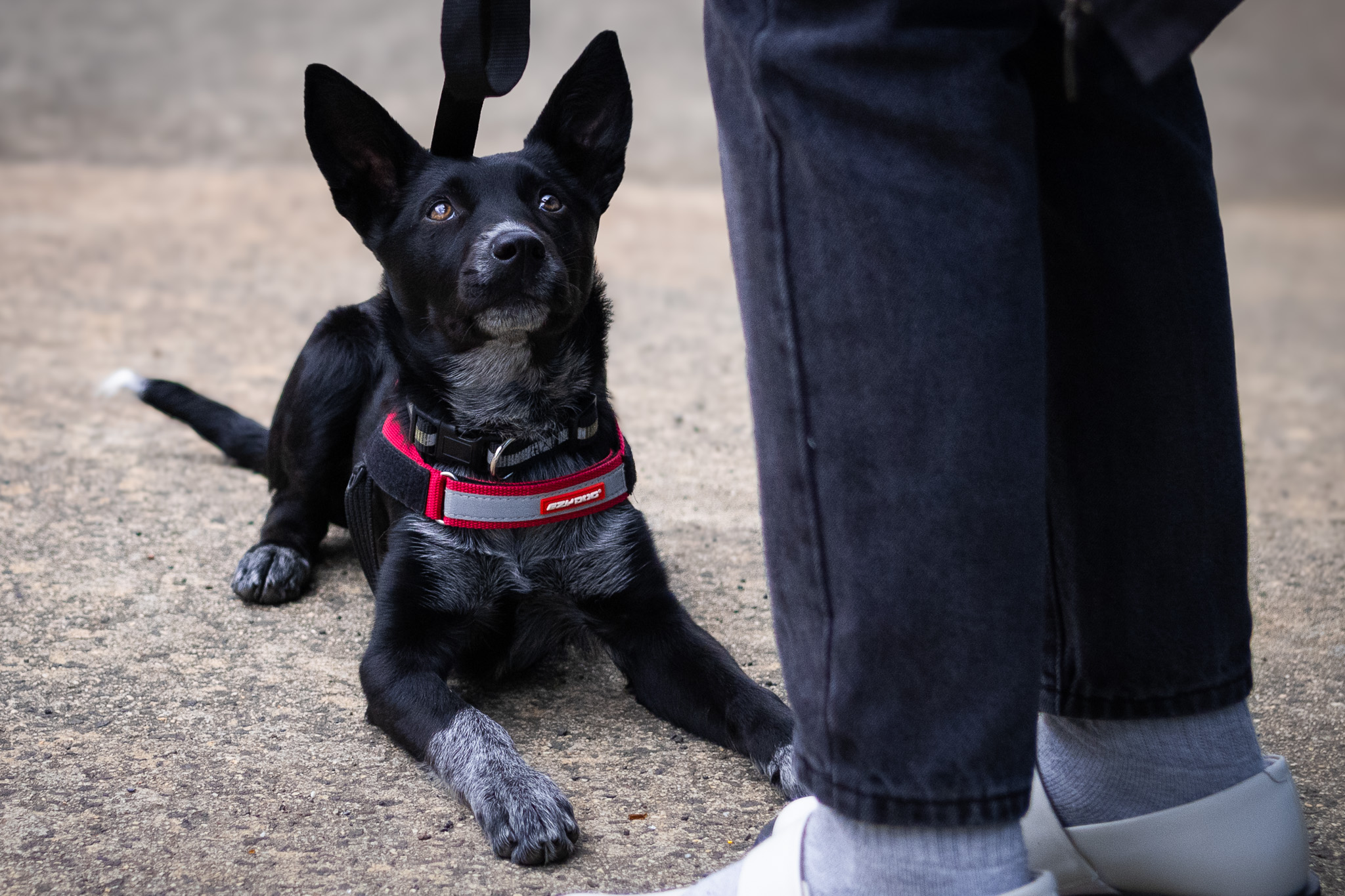
We’ve all been there. You think your dog has learned a solid down on cue. But then you try to show off the new skill to the family — and your dog looks at you blankly and wanders off to sniff some grass.
Dogs find it surprisingly hard to generalise — a behaviour nailed in one place doesn’t automatically transfer to another. To make something truly reliable, you’ll need to practice it in different rooms, different locations, inside and outside, and at different times of day.

Beyond practice, dogs also need to consolidate those experiences. That means reorganising short-term memories into long-term ones. This is the difference between understanding something in the moment and being able to reliably recall and apply it later. Just like us, dogs consolidate memories during sleep, which is part of why rest is so important for learning, especially for puppies.
Your dog didn’t forget the cue — they just haven’t learned how to do it everywhere yet

How to help your dog retain what they’ve learned
A couple of studies point to simple ways to help your dog consolidate what they’ve just learned: a 2025 study found that dogs who chewed for around 15 minutes after training showed improved memory consolidation (Moesta, et al. 2025), and other research has found that play after learning can also boost performance the next day (Affenzeller, et al. 2017, 2020).
This is one of the reasons we encourage brain breaks in the form of play in our classes.
So next time you wrap up a training session, consider giving your dog a good chew or having a quick play session — it might just help the learning stick.
At Urban Dogs HQ, we specialise in developmentally appropriate puppy training and socialisation. Reach out if you’d like some help.
Further Reading
Post-learning experience matters: Chewing after learning improves memory consolidation in dogs