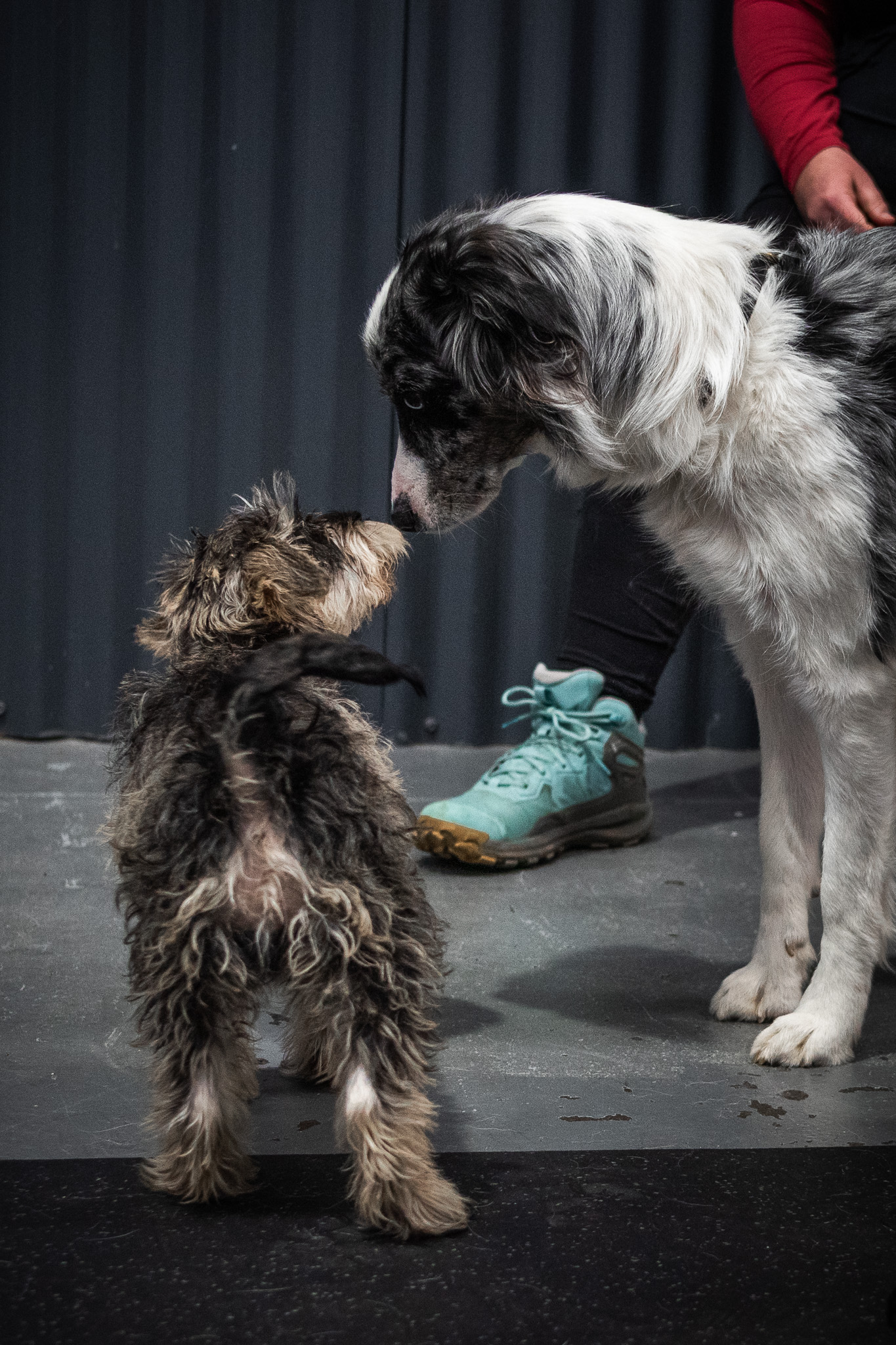
Some people think that dogs should just work things out themselves.
But dogs don’t always know best. Young dogs are still developing their social skills: learning to read body language, respond to another dog’s signals and respect space. When they’re overwhelmed or overexcited, those skills can get even worse.
I’m often asked when an owner should intervene when two dogs are interacting.
Honestly? Before there’s a problem.

When to step in
You don’t need to wait for growling, snapping or a fight to intervene between dogs. One simple guideline I use is the Three Second Rule.
The idea is simple: If you’re unsure about something, allow the interaction for around three seconds, create a brief break, then see what happens next.
Three seconds isn’t a magic number. It’s a useful reminder to check in rather than allowing an interaction to continue until one of the dogs has had enough.
3 Second Rule with Greetings
For on lead greetings, let them say hello for around three seconds and then move the dogs apart.
Look at both dogs. Stiffness, staring, freezing, a rigid tail, lip curling or attempts to move away can all indicate discomfort and are good reasons to end the interaction.
If both dogs remain loose and relaxed and choose to re-engage, they can have another few seconds together.
Those little pauses give dogs an opportunity to shake off, move away or choose to interact again.
3 Second Rule with Sniffing Bums
Don’t let your dog spend a prolonged period following another dog around with their nose glued to their rear end.
Count to three, then call them away and give the other dog some space. If both dogs want to interact again, that’s fine.
Think of it as the dog equivalent of a handshake that goes on just a little too long. Don’t let your dog be that dog.
If your dog repeatedly returns to intensely sniff another dog and finds it difficult to disengage, move them away for a proper break.
3 Second Rule in Play
Good play usually involves relaxed, wiggly bodies, pauses and role swapping. Both dogs should have opportunities to chase, be chased, wrestle, get up and move away.
Sometimes play becomes temporarily one-sided. One dog might pin the other, stand over them, keep chasing when the other wants to stop, or become a little too intense.
This is when you can count to three.
Often the dogs will change the picture themselves. The dog underneath stands up, the chaser slows down and walks away, everyone goes to the water bowl for a drink, or the roles reverse.
But if the same thing is happening when you get to three, step in and create a break. Then watch what happens.
If both dogs want to go back to playing, let them. If one dog chooses to wander away, sniff, return to their owner or do something else, let them do that too.
If the one dog wants to do something else and the other wants to play, redirect the players attention and help them make a good choice.
Interrupt early, not late
The Three Second Rule isn’t really about time.
It helps you get into the habit of noticing what’s happening before an interaction becomes a problem.
Brief interruptions don’t ruin the fun. They give dogs opportunities to pause, reset and make choices—and give us a chance to notice if one dog has had enough.
You don’t need to wait until a dog growls, snaps or tells another dog off.
If you’re wondering whether you should step in, start counting.
One… Two… Three.